 every
everyHow Much Space Do Chickens Need? Coop and Run Sizes by Flock (AU Guide)
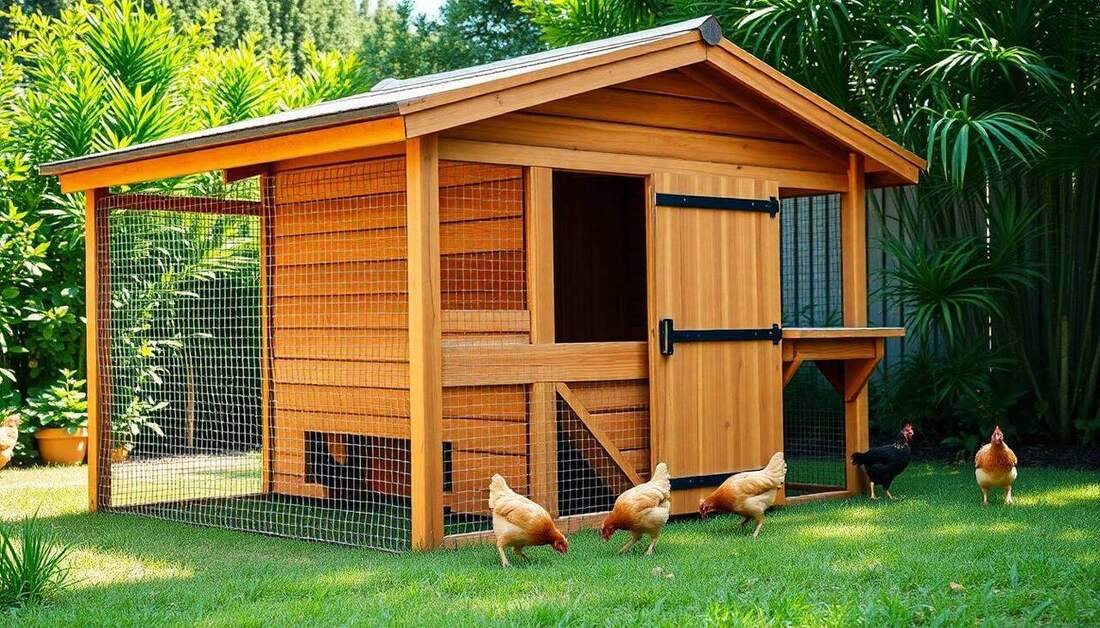
Picture the coop three weeks after the chicks arrive. The birds have feathered up, the cute stage is over, and the run that looked roomy for fluffy babies is now packed with full sized hens. Feathers start disappearing from backs and tails as bored birds peck at each other. One hen gets picked on and stops laying. The bedding turns to sludge faster than you can clean it, flies move in, and a couple of birds develop the sniffles that spreads through a crowded flock. Almost none of this is bad luck. It is what happens when chickens do not have enough space, and it is completely avoidable if you size the coop and run correctly before you buy.
So how much space do chickens need, and how do you split it between the coop and the run? This guide gives you defensible per bird figures, a flock size table in metric, and honest side by side comparisons of the choices that trip people up: coop only versus coop plus run, bantams versus standard breeds, and a fixed run versus a moveable tractor. It finishes with a simple framework for picking the setup that fits your yard. Every coop and run mentioned is stocked in our chicken coops and hutches range.
Have a browse of the coop range as you read, so you can match the sizes below to a real coop.
How much space do chickens actually need?
The most widely cited guidance is a floor, not a target. Inside the coop, most keepers and welfare bodies point to a minimum of roughly 0.37 square metres per standard hen, which is about four square feet each. For the outdoor run, a common minimum is around 1 square metre per bird, with 2 square metres or more being much better for happy, active hens. Treat these as guidance ranges rather than hard rules, because breed, climate and how much time your birds free range all shift the number.
The key idea is that more space almost always solves problems and rarely creates them. When Australia's RSPCA discusses backyard hens in its knowledge base on chicken housing, the theme is consistent: a smaller coop can suit birds that roam the yard all day, but hens kept in the coop and run most of the time need significantly more room to nest, flap, scratch and forage. If you are choosing between two coops, the larger one is almost always the better welfare decision.
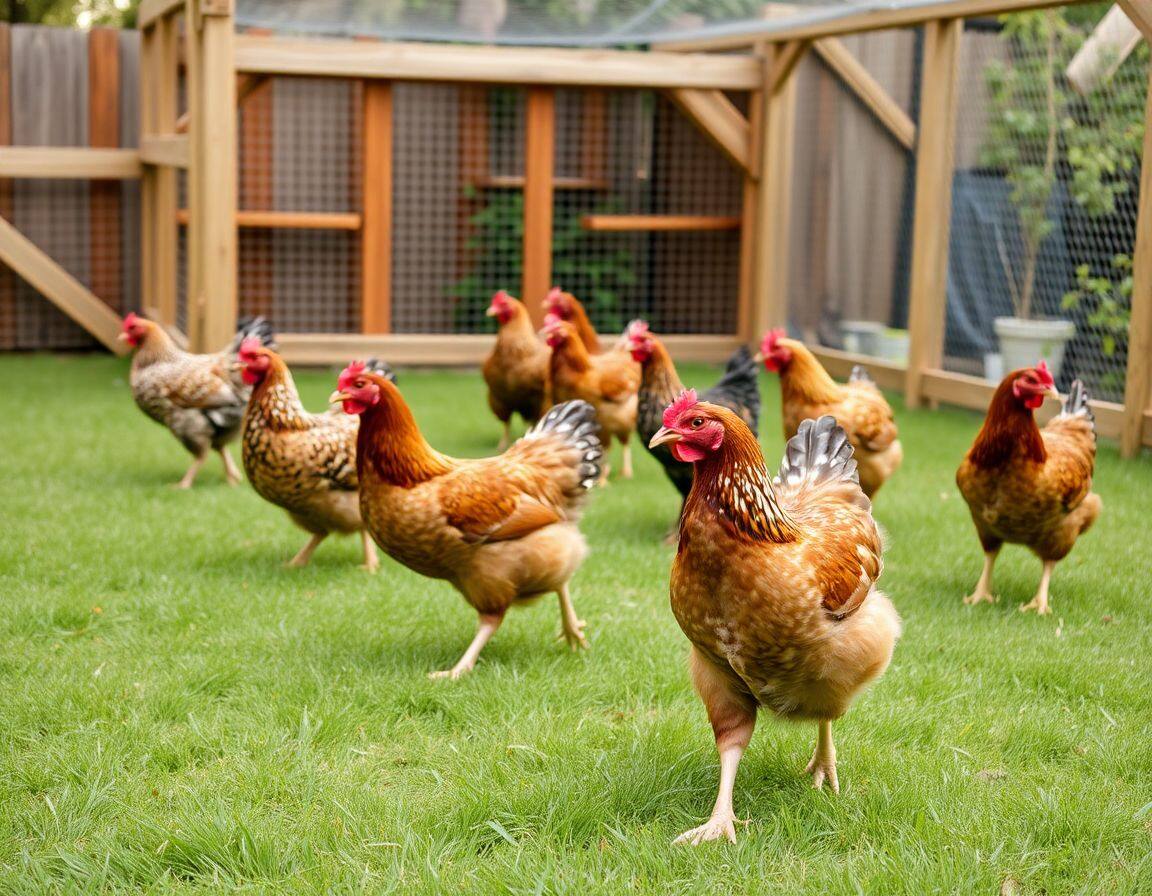
| Flock size | Coop interior (min) | Run space (good) | Nesting boxes |
|---|---|---|---|
| 2 hens | 0.75 m2 | 2 to 4 m2 | 1 to 2 |
| 3 hens | 1.1 m2 | 3 to 6 m2 | 1 to 2 |
| 4 hens | 1.5 m2 | 4 to 8 m2 | 2 |
| 6 hens | 2.2 m2 | 6 to 12 m2 | 2 |
| 8 hens | 3.0 m2 | 8 to 16 m2 | 2 to 3 |
Two things about that table. Nesting boxes do not scale one per bird, because hens happily share and queue for a favourite box, so one box per three to four hens is plenty. And the run figures assume the run is the birds' main daytime space; if your hens free range the backyard for hours each day, you can lean to the lower end, while birds confined to the run all day need the upper end.
Coop space vs run space: where do the square metres go?
New keepers often fixate on the coop and forget the run, but the two spaces do very different jobs and skimping on either causes problems. The coop is for sleeping and laying, so it needs roost bars, nesting boxes and weather protection, but birds only use it at night and to lay. The run is where they spend their waking hours scratching, foraging and moving, so it needs the most floor area. Here is the honest case for prioritising each.
Prioritising coop space
- Keeps birds comfortable overnight and during bad weather when they shelter inside.
- Room for proper roost length, since each hen wants around 20 to 25 cm of perch.
- Downside: a big coop with a tiny run still leaves bored, crowded birds all day, which is where pecking starts.
Prioritising run space
- Gives hens the room they need for the active hours that make up most of their day.
- Space to forage and dust bathe, which prevents most behaviour problems.
- Downside: a generous run paired with a cramped coop leads to crowded, poorly ventilated nights and squabbles on the roost.
The takeaway is that you budget both, not one or the other. A good rule is to size the coop from the per bird minimum, then give the run several times more area than the coop. A combined coop and run unit like the extra large wooden coop with run gets this balance right out of the box, with a sheltered sleeping house attached to a larger mesh run. If your birds free range, a compact secure coop such as the two storey wooden coop can work because the whole yard becomes their run.
Bantams vs standard breeds: does size change the space?
Body size genuinely changes the maths, so it is worth comparing before you settle on a flock. Bantams are miniature breeds, roughly a third to a half the size of standard hens, so they need less floor space per bird. Standard laying breeds like Isa Browns, Australorps and Plymouth Rocks are larger and need the full figures above. Larger heavy breeds and hybrids sit at the top of the range.
| Bird type | Coop space per bird | Run space per bird | Notes |
|---|---|---|---|
| Bantam (miniature) | 0.2 to 0.3 m2 | 0.5 to 1 m2 | Lighter, often better flyers, so higher fencing helps |
| Standard layer | 0.37 m2 | 1 to 2 m2 | The baseline most guidance is written for |
| Large or heavy breed | 0.4 to 0.5 m2 | 2 m2 or more | Bulkier birds, less agile, want ground level access |
A word of caution on bantams: the smaller footprint tempts people to keep more birds in the same coop, which erases the benefit and brings back the crowding problems. Give bantams the generous end of their range and you get lively, quiet, easy birds. Whichever breed you choose, buy the coop for the standard figure if you might ever swap to larger hens later, since it is far easier to house bantams in a slightly bigger coop than to squeeze big hens into a small one.
How big should a chicken coop be for 4 chickens?
Four hens is the classic Australian backyard flock, so it is worth working through as an example. Using the per bird figures, four standard hens want a coop interior of at least about 1.5 square metres, with two nesting boxes and enough roost bar for all four to perch at night. The run should give them somewhere in the range of 4 to 8 square metres, leaning to the larger end if they are shut in the run all day rather than free ranging.
In practical shopping terms, that points you at a mid sized coop and run combo rather than the smallest units, which are often really built for two or three birds despite the marketing. A model such as the extra large wooden coop with ramp or the coop with hatching box suits a settled flock of four, giving the sleeping house, boxes and an attached run without crowding. If you plan to grow to six or more birds, buy the bigger unit now and add a separate extra large run so the flock has room to expand into.
Ventilation and shade vs insulation: what matters in an Australian summer?
Most coop advice online is written for cold northern winters, which is exactly the wrong priority for most of Australia. Here, heat is the bigger killer, and chickens cope with cold far better than they cope with a stinking hot, poorly ventilated coop. Comparing the two priorities makes the point. In a cold climate you insulate and block draughts; in most of Australia you do the opposite and prioritise airflow and shade.
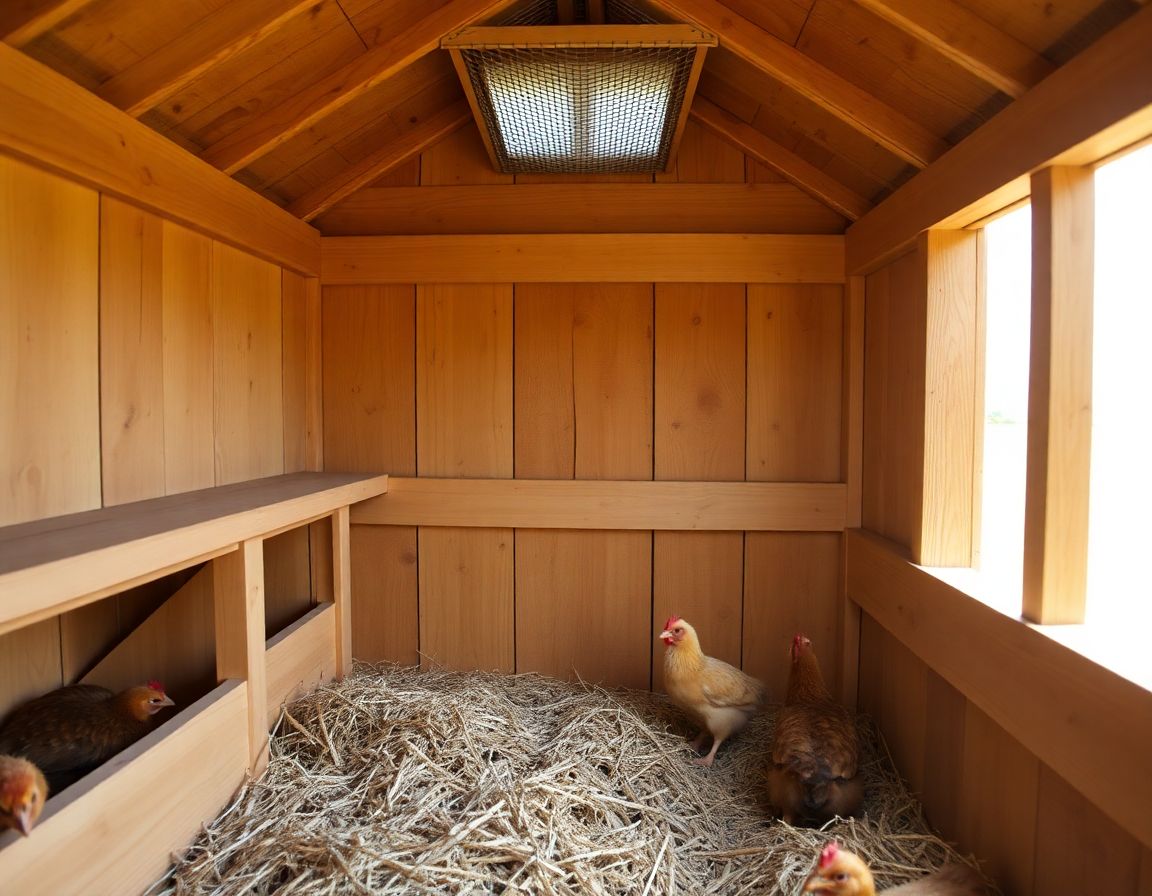
The heat management essentials are worth spelling out. Good ventilation up high lets hot air and ammonia escape while the birds roost below the draught. Shade over the run, whether from a tree, shade cloth or the coop itself, keeps the ground temperature down through the afternoon. Constant access to cool water is non negotiable on a hot day, and raising the coop off the ground on legs improves airflow underneath and keeps the floor cooler and drier. A raised, well ventilated timber coop such as the mobile coop on wheels handles an Australian summer far better than a sealed, insulated box designed for snow.
A fixed run vs a chicken tractor: which setup fits your yard?
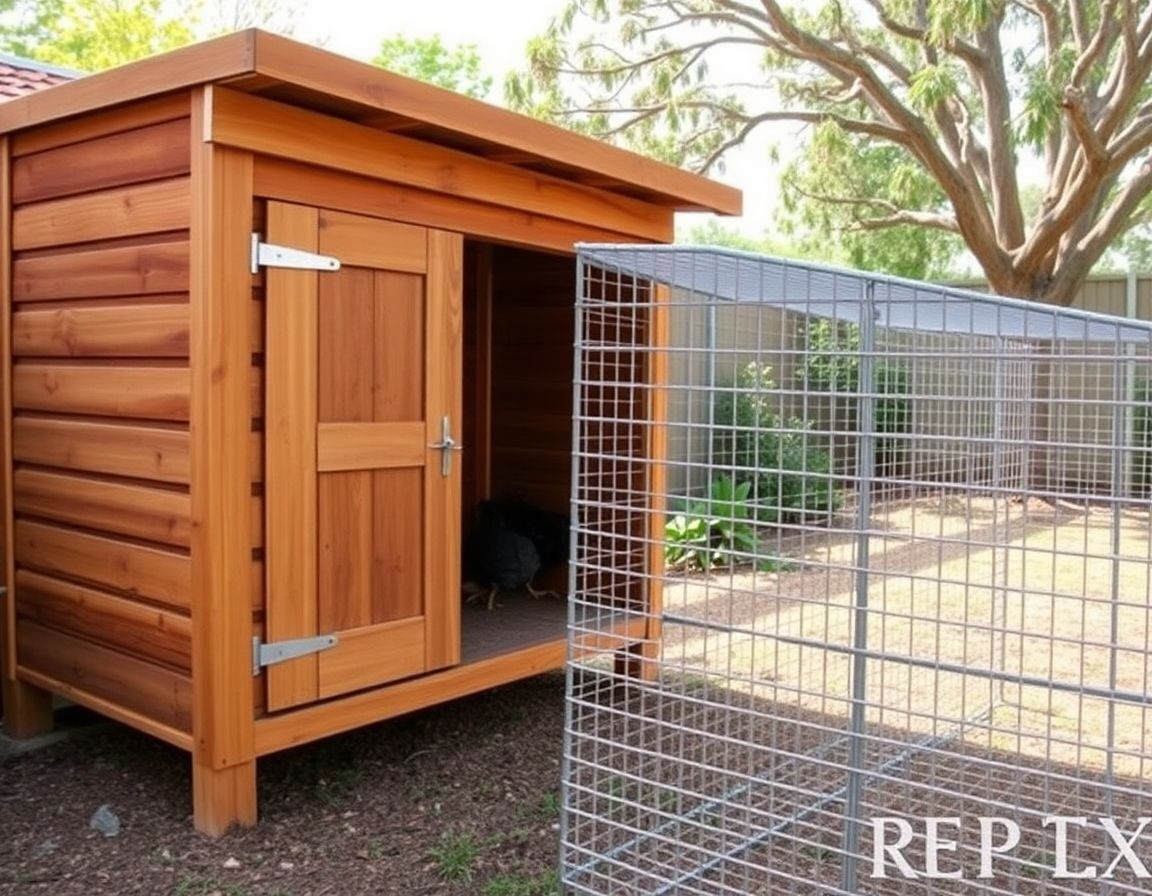
Once your coop is sized, the last comparison is how the run is built, and the two main options suit different yards. A fixed run is a permanent enclosed space attached to the coop. A chicken tractor is a moveable coop and run on wheels or skids that you shift around the garden. Both can be fox proof if built well, and predator proofing matters everywhere in Australia, where foxes, dogs, goannas and even quolls will test a weak enclosure.
Fixed run
- Larger and sturdier, so it suits bigger flocks and permanent setups.
- Easier to make thoroughly fox proof with buried or skirted mesh around a set perimeter.
- Downside: the ground inside gets worn bare and muddy over time and needs managing, so plan for deep litter or a moveable section.
Chicken tractor
- Moves to fresh grass regularly, so the birds always have clean ground to forage.
- Spreads manure around the garden and stops any one patch turning to mud.
- Downside: smaller, so it suits fewer birds, and you must check it sits flush to the ground at every new spot or a fox will push underneath.
Whichever you choose, the fox proofing basics are the same: strong galvanised mesh rather than flimsy chicken wire on the vulnerable panels, no gaps a paw can lever open, and mesh that either buries into the ground or skirts outward to stop digging. Secure the coop door every night without fail, because most losses happen after dark. You can browse both styles across our coop and hutch range and the wider i.Pet collection.
Which coop and run setup fits you?
Bring the comparisons together and the decision falls into a few clear profiles. Find the one that sounds like your backyard.
- Two or three hens, small courtyard: a compact coop with an attached run and daily supervised free ranging. Prioritise a secure, well ventilated sleeping house over sheer size.
- Four hens, standard suburban yard: a mid to large coop and run combo sized for the 1.5 m2 coop and 4 to 8 m2 run figures, with two nesting boxes. This is the sweet spot for most Australian families.
- Six or more hens, or plans to grow: buy the largest combined unit and add a separate run, budgeting the full per bird space so you are not rehoming birds in a year.
- Gardeners who want fresh ground: a moveable tractor for a small flock, shifted every few days, backed by strict nightly locking and ground flush fox proofing.
- Bantam keepers: use the smaller per bird figures but resist adding extra birds to fill the space; give them the generous end and enjoy quiet, easy hens.
Whatever profile fits, the winning move is the same one that runs through this whole guide: when in doubt, size up. Extra space is the cheapest insurance you can buy against pecking, disease and stopped laying, and it costs far less than the vet bills and heartache that crowding brings. Every coop we stock ships from Australian warehouse stock with a 12 month warranty and 10 day returns, so you can plan your flock with local support behind you.
Frequently asked questions
How much space do chickens need per bird?
As a guidance minimum, allow around 0.37 square metres per standard hen inside the coop and at least 1 square metre each in the run, with 2 square metres or more being much better. Bantams need less and heavy breeds a little more, and more space is almost always better.
How many chickens can I keep per square metre?
Inside the coop, keep to no more than about two to three standard hens per square metre as an upper limit, and fewer is better. In the run, aim for around one bird per square metre at most, ideally half that. Crowding beyond this drives feather pecking and disease.
How big should a chicken coop be for 4 chickens?
For four standard hens, look for a coop interior of at least about 1.5 square metres with two nesting boxes, paired with a run of roughly 4 to 8 square metres. Choose the larger end if the birds stay in the run all day rather than free ranging.
Do I need council approval to keep backyard chickens?
Rules vary by area, and many councils cap how many hens you can keep, set coop distance from boundaries, and prohibit roosters. There is no single national rule, so check your local council before you build or buy.
Related articles
Kids Table and Chairs: Get the Age and Size Right the First Time (AU Guide)
A step-by-step kids table and chairs guide: size the table and chair by age, choose materials, and check safety and room fit.
Pikler Triangle Age: What Age Are They For, and When Do Kids Outgrow One?
A friendly pikler triangle age guide: what age they suit, when kids outgrow them, and how to choose the right size frame.

Hollywood Mirror Bulbs: What Lights Do You Need for Makeup? (AU Guide)
A guide to Hollywood mirror bulbs: bulb types, lumens, warm vs cool light and why built in LED beats replaceable globes for makeup.