 every
everyPikler Triangle Age: What Age Are They For, and When Do Kids Outgrow One?
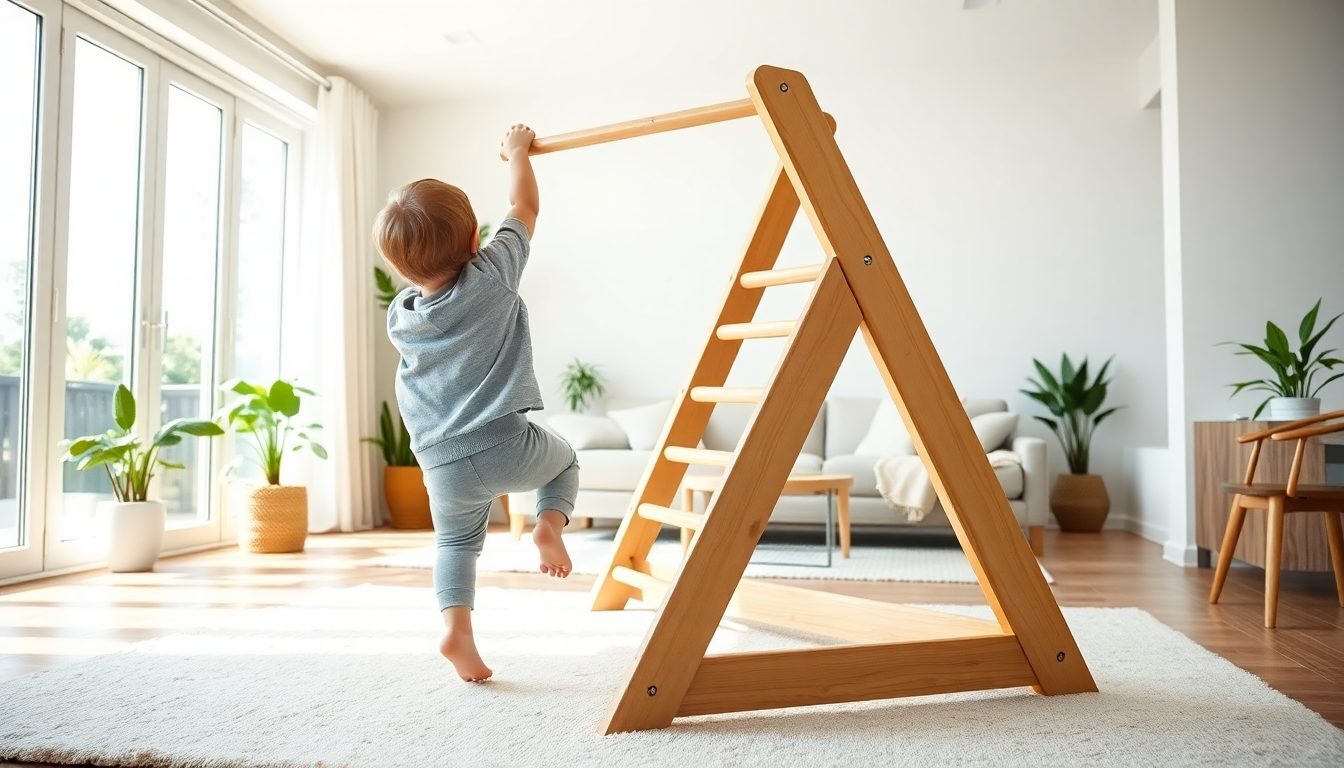
It usually happens on an ordinary weekday afternoon. You are folding washing on the lounge floor when you glance up and your toddler is halfway up the back of the couch, one chubby foot wedged against a cushion, the other reaching for the armrest like a tiny mountaineer. Your heart does that familiar lurch. You say her name in the calm-but-firm voice every Australian parent learns by instinct, and she turns and grins at you, thoroughly pleased with herself, and keeps going.
You lift her down. She marches straight back to the couch and starts again.
This is the part of parenting nobody quite warns you about. Somewhere between crawling and confident walking, small children develop a powerful, non-negotiable urge to climb. They climb the couch, the coffee table, the bookshelf, the dining chairs. It is not naughtiness. It is their body asking for a bigger challenge than a flat floor can give. Pulling upward builds the core strength, balance and spatial awareness they will lean on for years, and they will find something to climb whether you provide it or not.
The trouble is that a lounge suite was never designed to be climbed. The edges are hard, the cushions slip out from under little feet, and there is nothing safe to grip. So you hover, saying no what feels like a hundred times a day, and feel faintly guilty for squashing something so clearly healthy.
That guilt is what sends most parents searching. There has to be a better answer than a padded corner and constant vigilance, something built for exactly this stage, something that says yes instead of no. That is usually the moment a wooden climbing triangle first appears on the screen. And the first question that follows is a simple one: is my child even old enough for this, and how long will she really use it before she moves on?
The paediatrician who trusted children to climb
The climbing triangle is not a modern invention dreamt up by a marketing team. It goes back to Dr Emmi Pikler, a Hungarian paediatrician who spent her career watching how babies move when adults stop interfering. Her idea, now a cornerstone of Montessori circles, was that children develop best through free, self-directed movement: give a child a safe structure and the freedom to explore it at their own pace, and they will only attempt what their body is ready for.
A child left to climb on their own terms rarely climbs beyond their ability. They test one rung, feel it, and decide for themselves whether the next is within reach. That self-limiting caution is the whole point of a Pikler triangle.
That philosophy is why a good frame is open-sided, with evenly spaced rungs and a stable A-frame that will not tip when a determined toddler throws their weight around. As a piece of Montessori climbing equipment it is deliberately simple, and that simplicity is what lets it grow with your child. You will find several designs in our slides and climbing range.
How the climbing changes from baby to big kid
The honest answer to the pikler triangle age question is that it spans an unusually wide window, from the time a baby can pull upright to the early primary-school years. What changes is not whether they use it, but how.
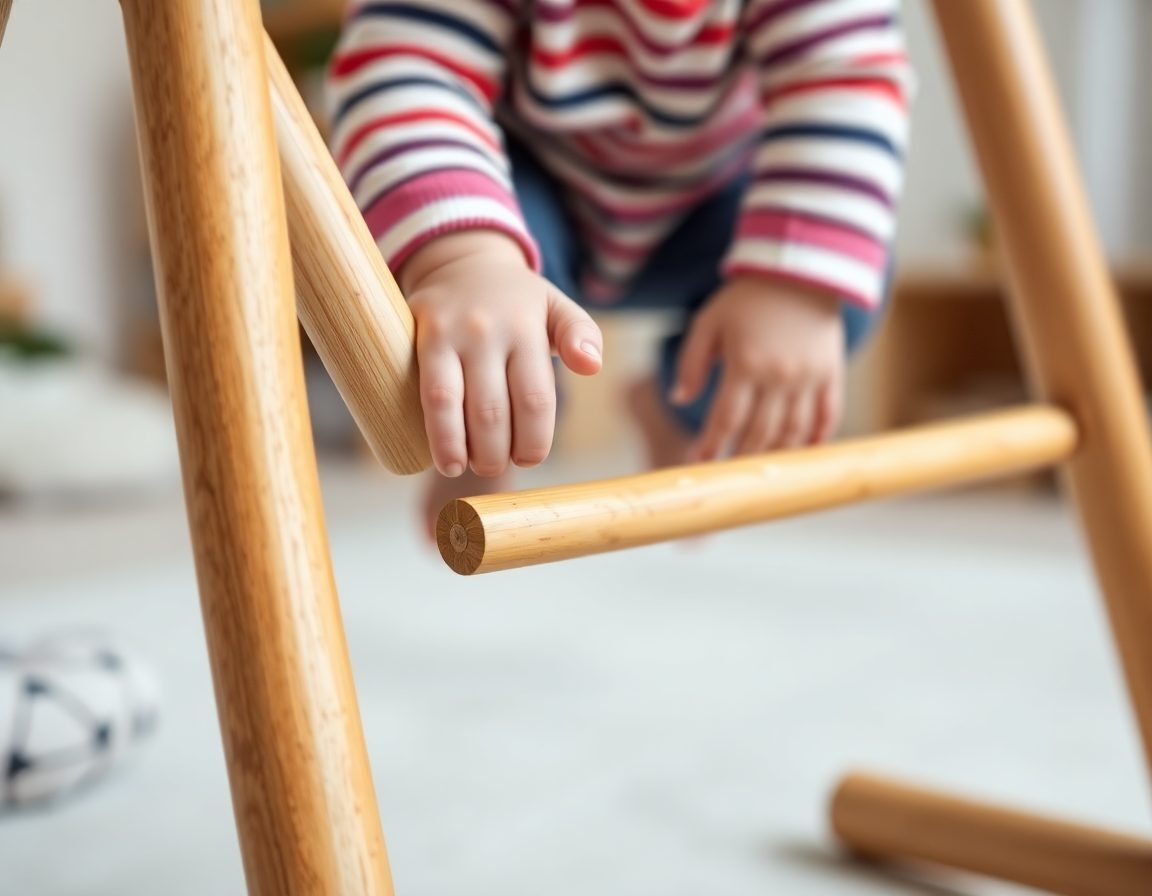
At the start, from around six to ten months, most babies are not climbing at all. They pull to stand against the lowest rung and cruise along the side, using the frame the way they would a coffee table. Some brands say from six months for this reason, though a supported sitter who is not yet pulling up will get little from it. At this age our foam climbing blocks and a soft foam playset with rocker make a gentler first step than timber, which is why parents shopping the baby range often start there.
From roughly one to three years the triangle comes into its own. This is peak climbing season: toddlers go up one side, over the apex and down the other, over and over, with fierce concentration. By the preschool years, about three to five, the frame becomes the setting for imaginative play. Draped with a sheet it is a cubby; add a ramp and it is a slide.
Why size matters as much as age
Age is only half the picture. Two children of the same age can suit very different frames, because height, weight and confidence vary enormously. A cautious, petite two-year-old and a fearless, tall two-year-old are not the same shopper.
Smaller foldable triangles typically stand around knee-to-hip height on an adult and suit babies and younger toddlers still finding their feet. Larger step-style triangles rise higher, offer a steeper challenge and hold their appeal for older climbers. Well-spaced rungs let a small child reach comfortably from one to the next, which keeps them climbing within their ability rather than lunging beyond it.
The number parents most often skip is the weight limit. Every timber frame lists a maximum load, and it is worth checking against your child in a couple of years, not just today, and against the reality that siblings and cousins pile on together. A convertible option like the 2-in-1 triangle and arch set stretches the appeal further, giving a growing child two ways to climb from one purchase.
When your child starts to outgrow the triangle
Most children keep using a climbing triangle in some form until around five, and plenty stretch it beyond once imaginative play takes over. But there are clear signs the frame has done its job.
Watch for these:
- The challenge has gone. When your child scales the frame without a flicker of effort, their body has moved past what it offers.
- They have reached the weight limit. This is the hard line. Once a child is near the stated maximum load, it is time to retire the frame or pass it on.
- They have simply lost interest. If it has sat untouched for weeks, a new configuration can often revive it rather than replacing it.
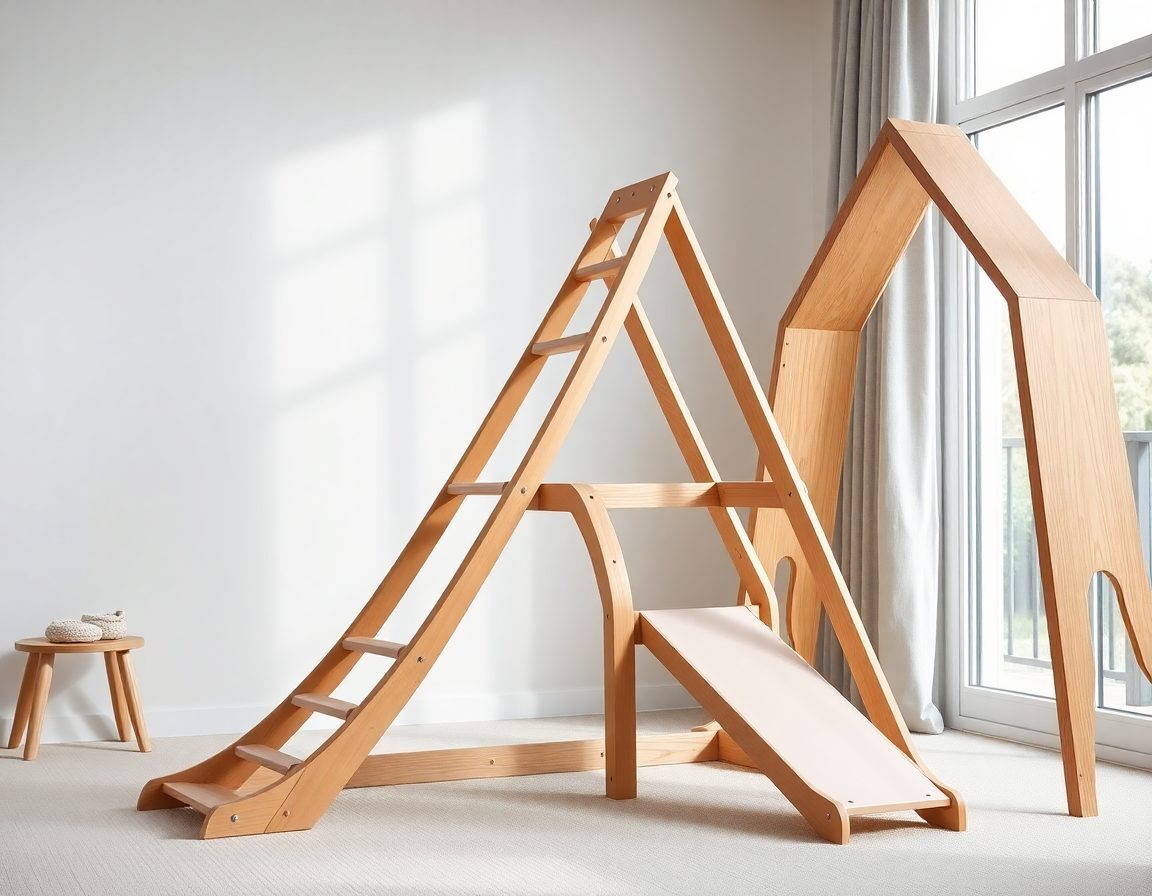
That last point is the good news. A triangle a child has mastered rarely needs replacing so much as extending. Adding a reversible ramp, or pairing the frame with an arch, resets the challenge and buys another year or two. Sets built around this idea, like the 3-in-1 Pikler set with slide or a climbing frame set with slide and triangle, grow rather than get outgrown.
Fixed or foldable, and which suits your home
Once you have settled on age and size, the frame itself comes down to fixed or foldable, and that choice has more to do with your living room than your child.
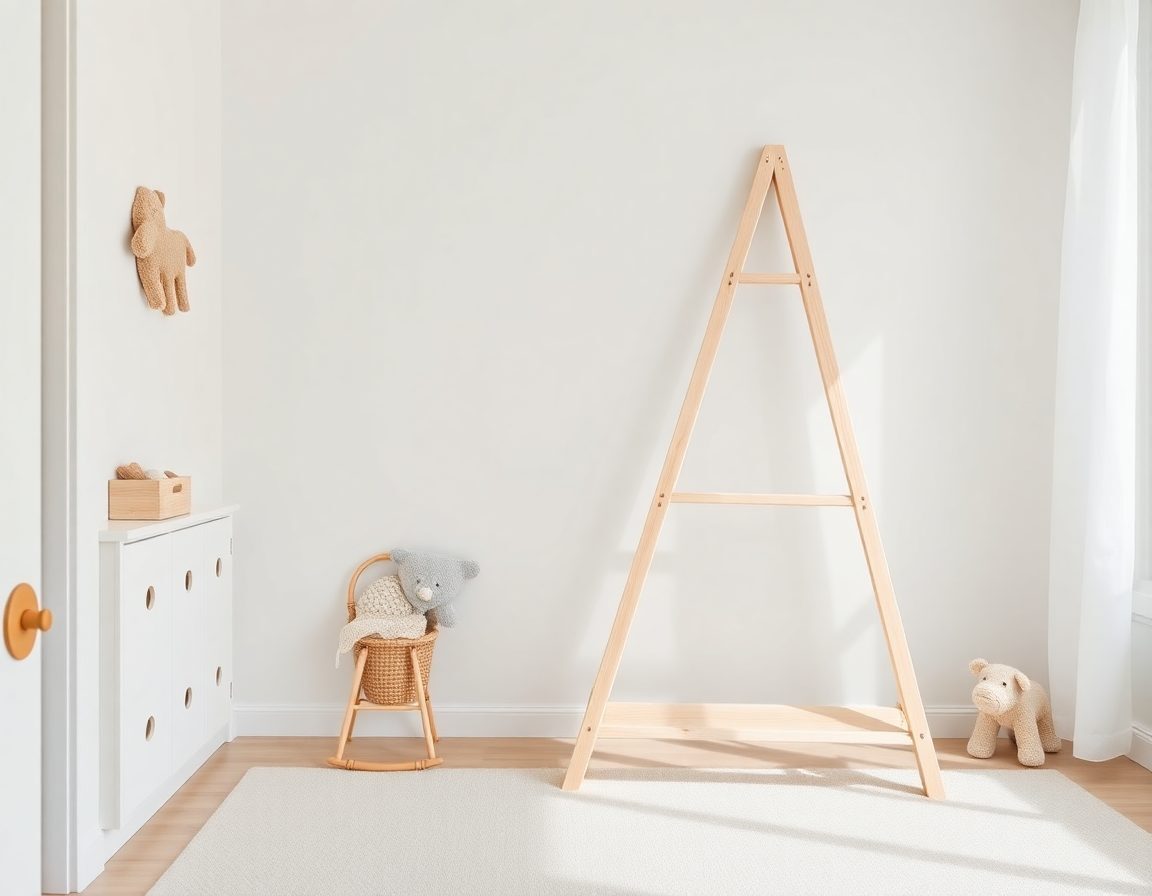
A fixed frame is rigid, rock solid and has fewer moving parts to loosen over time, which many parents prefer for peace of mind. The trade-off is that it takes up its full footprint around the clock. In a large playroom that is no issue; in a compact apartment or shared living-dining space, it can dominate a room.
A foldable triangle collapses flat to slide behind the couch or against a wall when the floor is wanted for something else. That flexibility suits most Australian homes, where the lounge room is also the play space. The one habit to build is checking the folding mechanism is fully locked open every time before your child climbs. Whichever you choose, our Keezi frames are made to be assembled once and lived with, not fought with.
Climbing is supposed to look a little bit scary
Here is what takes new parents a while to accept: a climbing triangle is meant to look slightly alarming. A child perched at the top, arms out for balance, is doing exactly what the equipment is for. Your job is not to prevent every wobble, but to make sure the wobbles happen over a soft landing and within arm's reach.
Supervision beats safety features every time. No frame, however well made, replaces an adult in the room while a young child is learning to climb.
A few habits cover most of the risk:
- Put it on a soft surface. A rug, foam mat or carpet turns an inevitable slip into a non-event.
- Give it clear space. Keep the frame away from hard furniture edges, glass and heaters.
- Supervise the early days closely. New climbers need eyes on them, not a hovering adult.
- Check the joints regularly. Tighten any bolts or rungs that have worked loose, especially on foldable frames.
- Respect the weight limit and age guidance. These exist for engineering reasons, not marketing ones.
For a broader picture of how climbing and active play support gross-motor development in the toddler years, Australia's government health service healthdirect is a reliable starting point.
Finding the right triangle for your child's age
Bring it together and the decision is less daunting than it looks. For a baby pulling to stand, start small and soft with foam or a compact foldable frame. For a busy toddler in the one-to-three climbing frenzy, a sturdy triangle with a generous weight limit is the sweet spot. For a preschooler, buy a frame that accepts a ramp or arch so the challenge keeps refreshing as they grow.
Every frame we stock ships from Australian warehouse stock, is backed by a twelve-month warranty, and comes with ten-day returns if the size turns out wrong for your space, which takes some guesswork out of buying equipment you cannot lift-test first.
Frequently asked questions
What age is a Pikler triangle for?
Roughly six months to five years and often beyond. Babies use the lowest rungs to pull up, toddlers between one and three do the real climbing, and preschoolers use it for imaginative play. Match the size and weight limit to your child, not their age alone.
When do kids outgrow a Pikler triangle?
Most move on around five, though many keep going to six or later for pretend play. The signs are that climbing no longer challenges them, they are near the weight limit, or it has sat unused for weeks. A ramp or arch often extends its life.
Is a Pikler triangle safe for a one-year-old?
Yes, with supervision and a soft surface underneath. One-year-olds are usually in the early climbing stage and self-limit to what they can manage. Keep the frame clear of hard edges and stay within arm's reach while they learn.
Should I choose a fixed or foldable Pikler triangle?
Choose fixed if you have dedicated playroom space and want maximum rigidity, and foldable if your living area is shared and you need to pack it away. Foldable frames suit most Australian homes, provided you always confirm the mechanism is fully locked open before each use.
Related articles
Kids Table and Chairs: Get the Age and Size Right the First Time (AU Guide)
A step-by-step kids table and chairs guide: size the table and chair by age, choose materials, and check safety and room fit.

Hollywood Mirror Bulbs: What Lights Do You Need for Makeup? (AU Guide)
A guide to Hollywood mirror bulbs: bulb types, lumens, warm vs cool light and why built in LED beats replaceable globes for makeup.
How Much Space Do Chickens Need? Coop and Run Sizes by Flock (AU Guide)
How much space do chickens need per bird? Coop and run sizes by flock, plus bantam vs standard breeds and fox proofing tips.